

Norbit
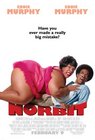 Eddie Murphy latest comic film brings Cinderella into the hood. Little Norbit grows up in an orphanage. His bliss comes to end when his buddy Kate gets adopted. Norbit is not the smartest fellow in the universe. But who says that Cinderella was a genius. This film has very funny scenes and at times is even moving. Murphy wrote, and directed the film, in addition to playing three different people, adult Norbit, his fat wife, and the Chinese owner of the orphanage.
Continue Reading
The Namesake
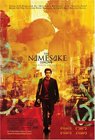 Biographical films often stumble precisely because they try to cover an entire lifetime. The viewer finds it disorienting when multiple actors play one and the same person during childhood, teenage years, adulthood and old age. Just when you have gotten used to a person and learned enough to feel a connection with her, a new actor severs the emotional tie you have developed to the character. Compressing a lifetime into 120 minutes makes it difficult to cover any period in sufficient detail that you feel you learned enough about the character to understand his or her actions. The Namesakesolves these challenges by only covering the first 30 years of Gogol’s life and by giving his parents, who are always played by same actors, equal standing in the film. The trailer for the film gave no hint that The Namesake is a marvelous film about the challenges of growing up in America as second-generation Indian immigrants. The film will be appeal beyond the large Indian immigrant community because the screenplay is based on a book by a Pulitzer Prize-winning author (Jhumpa Lahiri) who has a sharp eye and vivid imagination. I was so impressed with the story that I will buy Lahiri’s collection of short stories for which she received the Pulitzer Prize.
Shooter
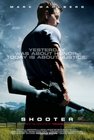 Shooter is a reaction to the shenanigans of the Bush administration. Inspired by the deeds of Dick Cheney and his neo-conservative fellow travelers, the film suggests that a few powerful officials can manipulate the entire machinery of government to pursue policies that would never be condoned if the public truly understood what is going on. In Shooter, a senator gets away with organizing the assassination a foreign leader who is sitting next to the president. Recruited to help protect the president, a former special operations soldier (the shooter, aka Mark Wallberg), is getting framed for the assassination. When justice is not available to the Shooter, he follows the West traditions and takes justice his own hands, killing the conspirators. The premise of the entire film is unrealistic. Now that the public has realized that it was duped into believing the IRAQ war was necessary, the Bush government would not succeed in getting the U.S. into an unnecessary war.
Breach
 Breach chronicles how the mot damaging traitor in the history of the FBI was caught. This film has non of action sequences that made Shooter suspenseful. Robert Hanssen, who sold very important secrets to the Soviet Union, is portrayed as deeply religious catholic man who goes to church every day. The film implicitly suggests that no direct link exists between religiosity and moral behavior. What the film cannot answer, perhaps because such a question cannot be answered at all, is why a person like Hanssen would betray his country and send American spies in the Soviet Union to their death. One is left with the realization that human behavior in some cases defies all explanation. For a culture that prizes coming up with reasons for everything this is a bit hard to swallow.
Flags of our Fathers
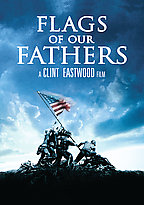 A few weeks ago, I sang the highest praises for Clint Eastwood’s Letters from Iwo Jima. My expectation was that Eastwood’sFlags of our Fathers would be an equally good movie, telling the story of the battle for Iwo Jima from the American side. To my great surprise, the prequel is stunningly inferior to Letters from Iwo Jima. The story of Flags of our Fathers seems historically inaccurate. The war scenes appear staged as if it had a much smaller budget than Letters from Iwo Jima. Both films are anti-war movies but in Flags of our Fathers the anti-war message feels contrived. On all levels [i[Letters from Iwo Jima is superior to Flags of our Fathers. It is almost impossible to believe that the same director and to some extent the same screenplay writer (Paul Haggis) are responsible for both films. The fact that the same people could make films of so different quality goes to show that the original story behind the film is crucial for making a great film. Iris Yamashita, the lead writer for [i[Letters from Iwo Jima wrote a better screenplay than then her partner, Paul Haggis, who was more responsible for Flags of our Fathers.
Catch and Release
 One should not be a reviewer of a film in which a colleague has a gig. Richard Roeper (who together with Ebert forms the Chicago Sun-Times film critic team) said that he did not like the film based on the trailer, but came to like it quite a bit. This is chick’s film and not one that Roeper would have praised if his colleague Kevin Smith did play a role (Smith sometimes replaces Roger Ebert in the critic’s seat). Catch and Release has an interesting twist for a romantic comedy. It opens with a tragedy (the fiancé dies just before the wedding and the wedding is turned into the funeral.) If you are female and you are in the mood for a romantic comedy where romance often fails, you might not be disappointed. But I strongly recommend that before seeing the film you read the first chapter on America in Pamela Druckerman’s book Lust in Translation. You will have much deeper understanding of why the characters in the film feel the way they do. For guys Catch and Release is just to slow. If your girl wants to see this film, go to another room and watch instead A heart in the winter (Un Coeur en hiver), an excellent French movie which guys like much more than girls. Every guy I know loved the film and every girl found it depressing!
Lust in Translation
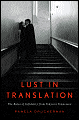 ]I just started to read Pamela Druckerman’s book on the rules of infidelity across different cultures. This report by the former Wall Street Journal writer is exceedingly entertaining and well written. I will publish a summary judgment when I have finished the book. But in the meantime, I want share a few good lines from the acknowledgments: People sometimes compare a writing book to having a baby. Having now done both, almost simultaneously, I can say definitely that a book hurts much more…Few men would propose marriage to a woman who is writing a book on adultery. Simon Kupor not only married me, he also read every draft.
Querschlaeger “Live is Lebendig”
 A friend of mine sent me the live CD of the Austrian band “Querschlaeger.” Fritz Messner, the song writer, has a sharp eye for the comic aspects of life and is a born story teller. Every song is preceded by a little funny story. If you speak, German the CD is a real treat. To keep its artistic independence, the band refuses to sign a contract with a label. Good for them and even better for us. The band is superb. You can buy “Live is Lebendig” and other CDs directly from the band’s website.
America, the land of limited opportunities?
 New evidence suggests that old Europe provides more opportunities economic mobility than the U.S. Even Canada comes out ahead. Read this interesting article by Clive Crook.
Rags to Rags, Riches to Riches: Maybe it
Continue ReadingBridge to Terabithia
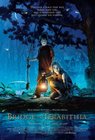 Many people claim that it is harder to make good friends when you are an adult. I am not sure if this is true. Adults, perhaps having been disappointed more than once, may be less open than the average child to let a new person into their lives. The film celebrates the power of friendship and the human imagination. Leslie, the daughter of two writers, has a mind so fertile with imaginary images that she can teach Jesse how to leave behind reality and create their own make-believe. The two become best friends until something tragic happens. It is a great film for children, but it also has some sad moments that might be a bit depressing for too young children.

© 2026 Peter Murmann. Powered by ExpressionEngine.
